Growing Bottled Water Production Line
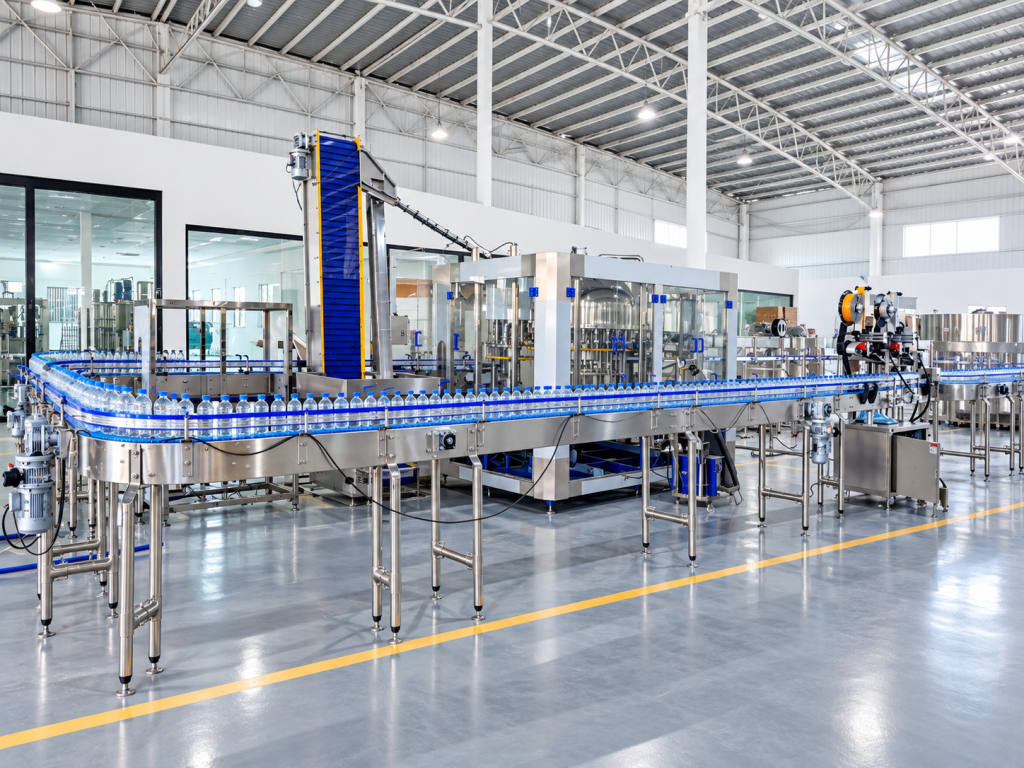
TINGS provides fully automatic bottled water production solutions for businesses requiring higher production capacity, lower manual dependence and efficient long-term operation.
Our growing production line solutions commonly cover projects around 3,000–6,000 BPH, while the final production capacity and equipment configuration are determined according to the customer’s market demand, investment plan, bottle format, water source and factory conditions.
Is a Fully Automatic Line Right for Your Project?
A fully automatic production line is not necessarily an upgrade from a semi-automatic line.
Some investors choose to start their bottled water business directly with a fully automatic production line because they have sufficient investment capacity and expect stronger market demand from the beginning.
Other businesses may begin with a smaller production setup and expand when their sales network and production requirements develop.
Therefore, there is no single investment path suitable for every bottled water project. The right production solution depends on factors such as available investment, expected sales volume, local bottled water prices, labor costs, market coverage and future development plans.
The goal is not simply to choose the largest production line. The goal is to choose a production capacity that makes commercial sense for your market.
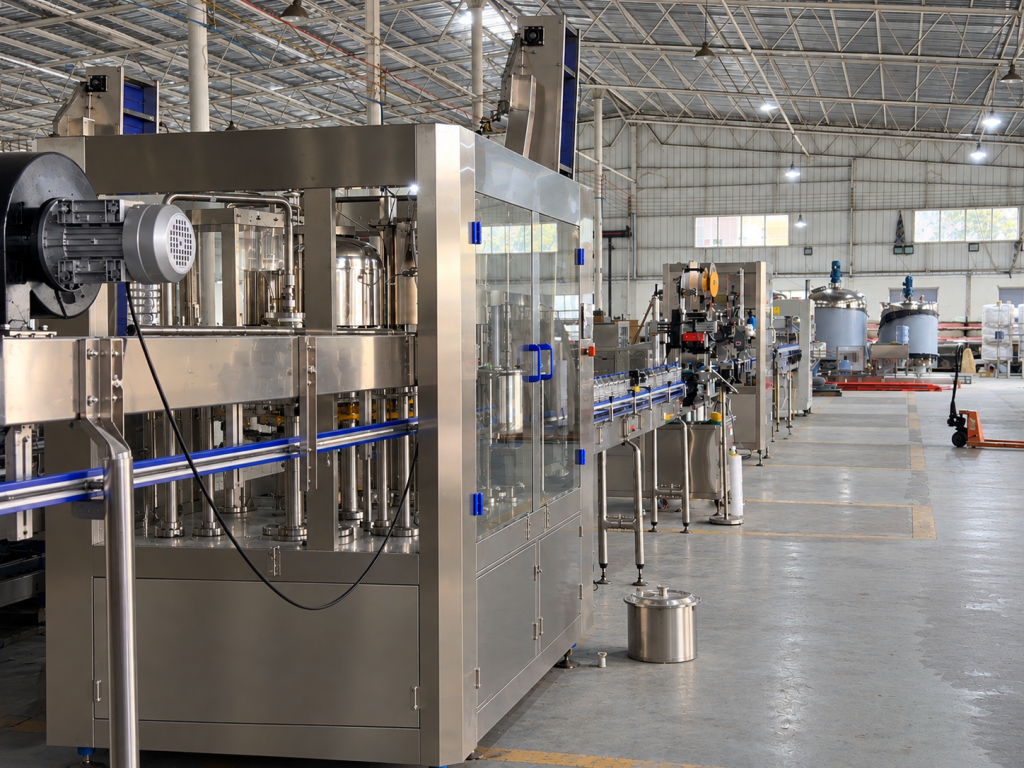
Production Capacity for Growing Water Businesses
aFor bottled water businesses moving toward higher production capacity, 3,000–6,000 BPH is a common range for fully automatic production lines. This range can be suitable for businesses with growing market demand, sufficient investment capacity, or a plan to reduce dependence on manual operations.
Within this range, the final production capacity and equipment configuration should be determined by the customer’s market demand, investment plan, labor costs, bottle format and factory conditions. Some customers move from a smaller production line to a fully automatic solution as their business develops, while others choose to start directly with a 3,000–6,000 BPH line.
The 3,000–6,000 BPH range is the focus of this Growing Solution, while TINGS also provides production solutions for projects with different capacity requirements.
Why Choose Fully Automatic Production?
For projects with sufficient market demand and investment capacity, a fully automatic production line can provide higher production capacity and reduce dependence on manual operations.
More production processes can be connected automatically, allowing bottle blowing, filling, conveying, labeling and packaging to operate as a coordinated production system.
At the same time, a fully automatic line requires a higher initial investment. Its economic value therefore depends on production demand, local labor costs, expected operating hours and the long-term development plan of the business.
Higher Production Capacity
Designed for businesses requiring substantially higher output than typical semi-automatic production.
Lower Manual Dependence
Automated bottle handling and connected production processes reduce repetitive manual operations.
Long-Term Operating Efficiency
For projects with sufficient demand, higher automation can help control labor requirements and improve production efficiency.
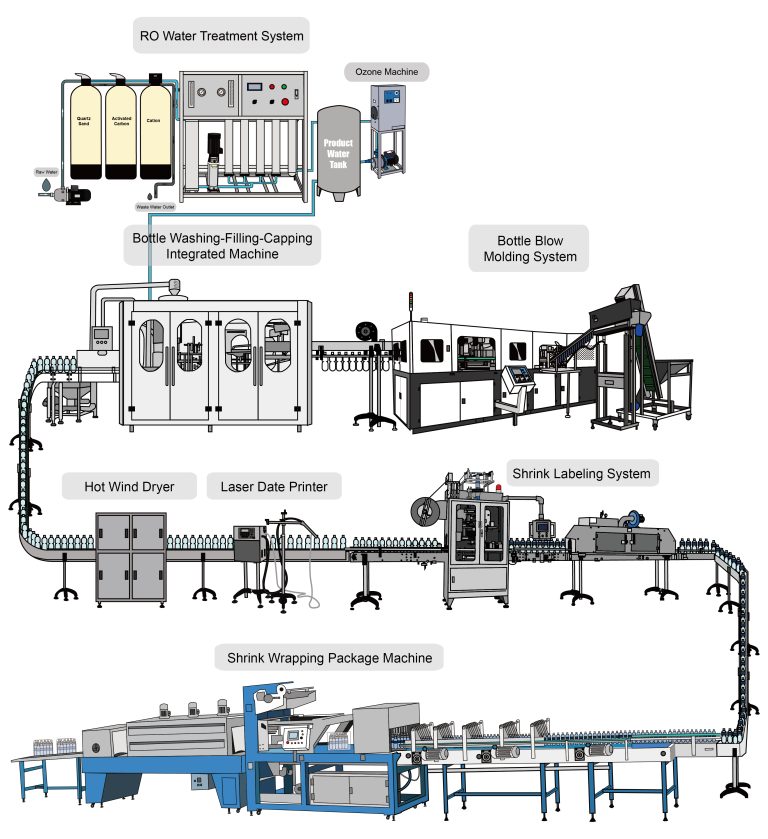
From Raw Water to Finished Bottles
Water Treatment
Bottle Blowing
Rinsing, Filling
& Capping
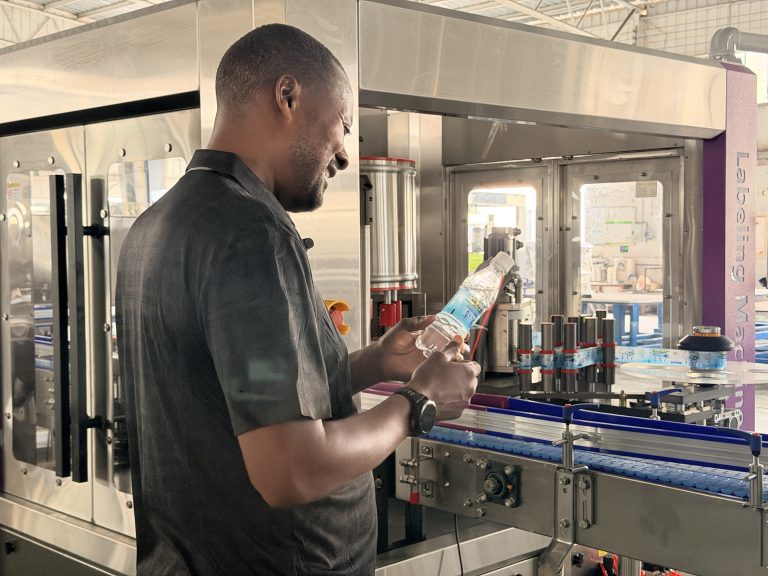
Labeling
Date Coding
Packaging
Depending on the product and packaging requirements, different labeling technologies can be integrated into the production line, including shrink sleeve, OPP and self-adhesive labeling. The packaging section can also be configured according to the customer’s finished-product requirements.
One Solution, Different Project Requirements
Although many bottled water factories use similar production processes, the final production line does not have to be identical for every project.
The water treatment system depends on the raw water source and required water quality. Bottle blowing depends on the bottle design and production target. Labeling equipment depends on the label material and application method. Factory layout also affects equipment positioning and conveyor routing.
TINGS therefore develops the final production configuration according to the specific project instead of treating every factory as the same standard package.
Water Source
Treatment equipment is selected according to raw water quality and the required finished-water standard.
Bottle Design
Bottle size, shape, neck finish and preform specifications influence the bottle blowing and conveying system.
Labeling Requirements
Shrink sleeve, OPP and self-adhesive labels may require different labeling solutions.
Factory Conditions
Building dimensions, columns, entrances, utilities and available space are considered during layout planning.
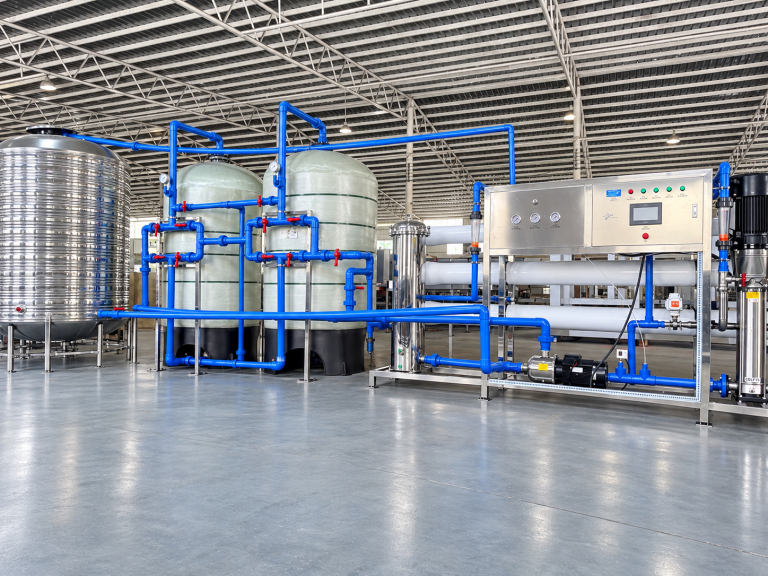
Water Treatment Designed for Your Water Source
Water treatment is an important part of every bottled water project, but the treatment process should not be determined only by the production capacity.
Different water sources may require different treatment processes. TINGS evaluates the raw water condition and project requirements before determining the appropriate treatment configuration.
Depending on the water source and required treatment level, the system may include filtration, activated carbon, softening, ultrafiltration, reverse osmosis, ultraviolet treatment, ozone and other treatment processes.
The final treatment configuration is customized according to the actual project requirements.
A Complete Production Flow, Not Just Individual Machines
A bottled water factory needs each production stage to work together. TINGS coordinates the bottle blowing, filling, conveying, labeling, coding and packaging sections so that the complete production line can operate as an integrated system.
The exact equipment selection depends on the required production capacity, bottle format and packaging method.
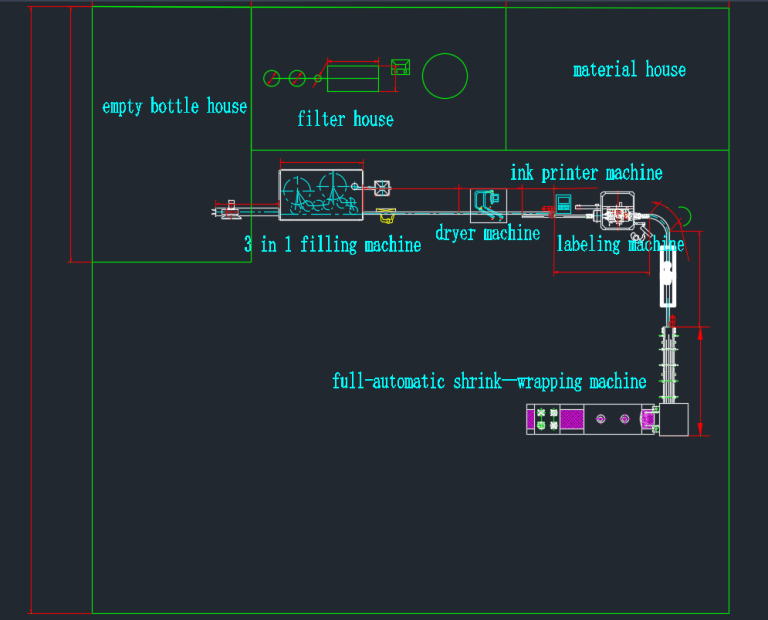
Factory Layout Before Equipment Production
A production line must fit the factory as well as the production requirements.
Before equipment production, TINGS can work with customers to review the available factory space and develop an appropriate production layout.
Equipment dimensions, conveyor direction, operator access, maintenance space, water treatment position and production flow can all be considered during the layout stage.
When a factory has structural columns, limited height, restricted entrances or other space limitations, these conditions can be addressed before manufacturing begins.
A bottled water business does not always follow the same investment path.
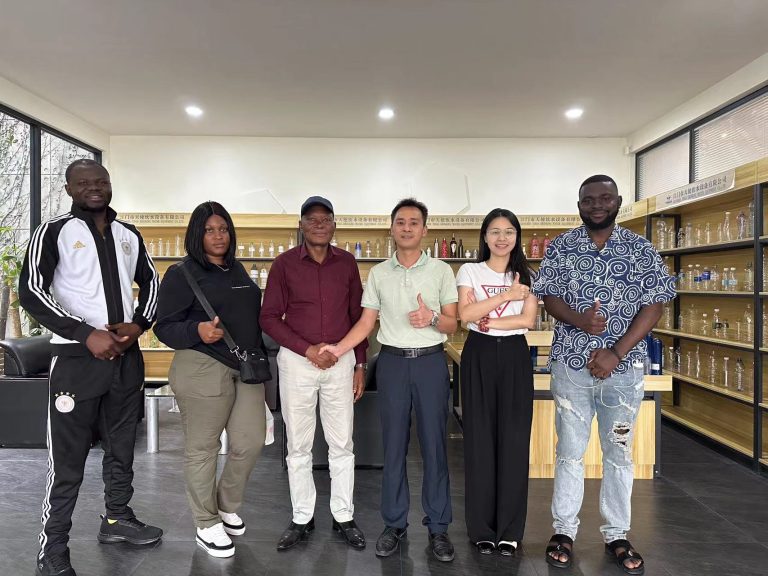
One example is a bottled water project in Ghana. The customer previously purchased a 2,000 BPH production line from TINGS. As the business developed and production requirements increased, the factory later expanded to a 10,000 BPH production capacity.
This project shows that production requirements can change as a bottled water business develops. Some investors may start with a smaller production capacity and expand later, while others with sufficient investment capacity and market demand may choose a larger fully automatic line from the beginning.
The appropriate production solution should therefore be based on the customer’s current market, investment capacity and long-term business plan.
Why Choose TINGS for Your Bottled Water Project?
20+ Years of Manufacturing Experience
TINGS has more than 20 years of experience in water treatment and beverage production equipment manufacturing.
Complete Production Solutions
From water treatment and bottle blowing to filling, labeling and packaging, TINGS can coordinate the major sections of a complete production line.
Factory Layout Support
We can assist customers with equipment arrangement, conveyor routing and factory layout before production.
International Project Experience
TINGS supplies bottled water and beverage production equipment for projects across Africa, Asia, the Middle East and other international markets.
Growing Bottled Water Production Line FAQ
Is a fully automatic line suitable for a new bottled water factory?
Yes, depending on the project’s investment capacity and expected market demand. Some new investors choose to start directly with a fully automatic line, while others prefer a smaller initial production setup.
Is Growing always an upgrade from a semi-automatic line?
No. Some customers upgrade after their business develops, while others start directly with a fully automatic production line. The appropriate investment path depends on budget, market demand, labor costs and business planning.
What production capacity does this solution cover?
TINGS commonly develops fully automatic bottled water projects around 3,000–6,000 BPH within this solution range. Higher capacities can also be considered for projects with greater production requirements.
Can TINGS design the factory layout?
Yes. TINGS can assist with factory layout planning based on building dimensions, equipment arrangement, conveyor routing, maintenance access and production flow.
Can the labeling system be customized?
Yes. The labeling solution can be selected according to the bottle design and label type, including shrink sleeve, OPP and self-adhesive labeling.
Let's Find the Right Production Solution for Your Market
Tell us about your water source, bottle size, expected production, factory space and investment plan. TINGS can help evaluate the appropriate production solution for your bottled water project.
Get Your Project Consultation