Why Your 20,000 BPH Bottling Line May Not Produce 20,000 Bottles Per Hour
Many investors focus on one number when purchasing a beverage production line: BPH (bottles per hour).
A supplier tells them:
“20,000 BPH production line.”
It sounds clear.
But after installation, some factories discover that the actual output is lower than expected.
The reason is usually not a machine failure.
The reason is that a bottling line is not one machine.
It is a complete production system.
And every system has a limitation.
The Capacity of a Bottling Line Is Decided by the Slowest Machine
A complete bottled water production line normally includes:
- Water treatment system
- Bottle blowing machine
- Filling and capping machine
- Coding machine
- Labeling machine
- Packaging machine
These machines work together as one production chain.
The final production capacity is not determined by the fastest machine.
It is determined by the machine with the lowest effective capacity.
For example:
A filling machine is rated at 20,000 BPH.
The labeling machine can handle 25,000 BPH.
The packaging machine can handle 30,000 BPH.
The production line capacity is still around 20,000 BPH, because the filling machine becomes the bottleneck.
This is the basic principle of the bottleneck effect in manufacturing.
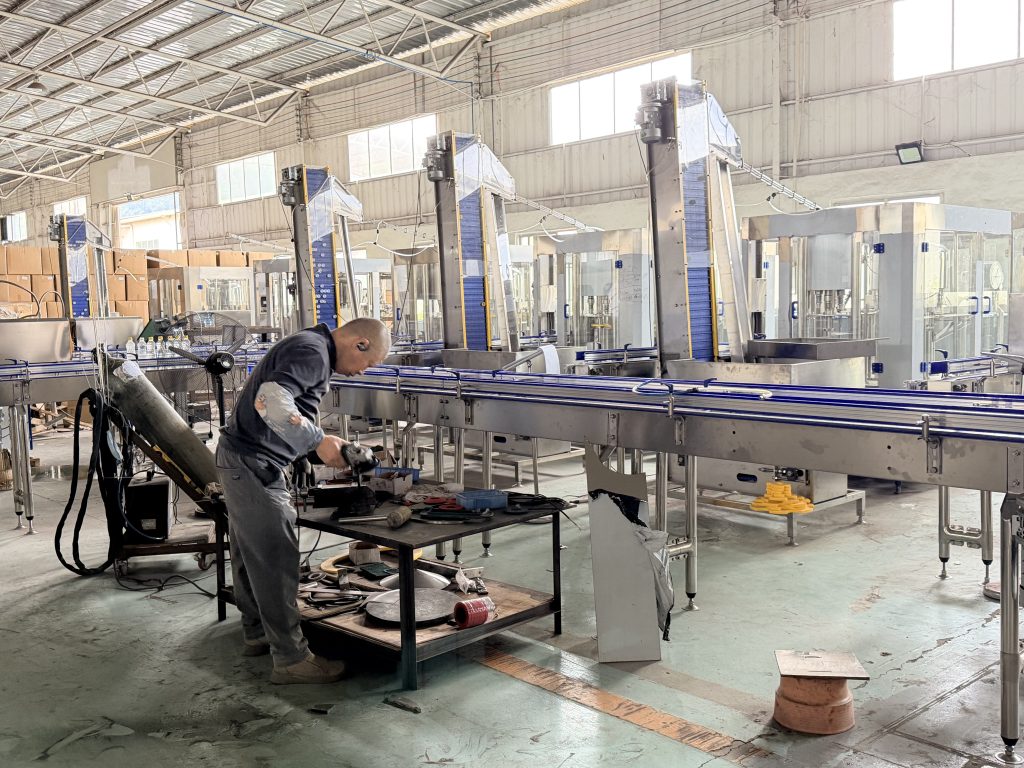
A machine’s rated capacity represents its maximum designed speed under ideal conditions.
However, real production includes many practical factors:
- Bottle supply stability
- Cap feeding conditions
- Label replacement time
- Product changeover
- Operator experience
- Routine maintenance
Therefore, experienced manufacturers usually design production lines with a reasonable safety margin instead of running every machine at its maximum limit.
A production line operating continuously at its mechanical limit may increase:
- Vibration
- Component wear
- Maintenance frequency
- Unexpected downtime
The goal is not only to achieve a high number on paper.
The goal is to maintain stable production every day.
Why Two Bottling Lines With the Same Capacity Can Have Different Prices
Many customers compare quotations based only on:
“Both suppliers offer a 10,000 BPH line. Why is one more expensive?”
The answer is often inside the machine.
The production capacity may look the same, but important components can be different:
- PLC control system
- Electrical components
- Motors
- Bearings
- Stainless steel quality
- Filling valve design
- Mechanical structure
These details directly influence the stability and service life of the production line.
For high-speed bottling plants, the question is not only:
“How fast can the machine run?”
The more important question is:
“How long can it run stably?”
At TINGS, we do not design a production line only according to the number written on a quotation.
We first understand the customer’s actual production target:
- Expected daily production
- Working hours per day
- Bottle size
- Beverage type
- Available investment
- Future expansion plan
Then we match every machine in the production line.
For example, if a customer needs a stable production capacity of 20,000 bottles per hour, we will not simply select every machine at exactly 20,000 BPH.
Instead, we consider reasonable capacity margins between different machines to avoid one machine limiting the entire production line.
Because a successful bottling factory is not built by buying the fastest individual machine.
It is built by creating a balanced production system.
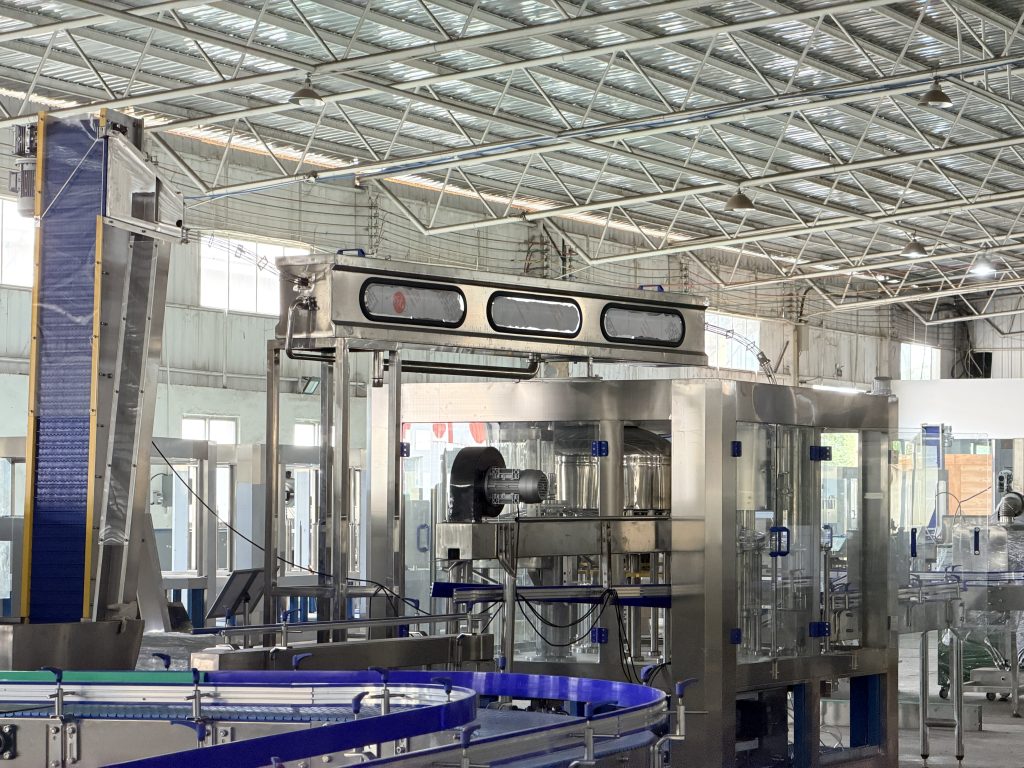
A Complete Production Line Is More Than a Combination of Machines
A bottling production line is like a chain.
Every machine is an important link.
A strong link cannot compensate for a weak link.
The best production line is not always the one with the highest advertised speed.
It is the one that matches the customer’s real production requirements and operates reliably for years.
At TINGS, we focus on providing complete beverage production solutions — from water treatment and bottle production to filling, labeling, and packaging — with every part designed to work together.