 English
  Chinese
 Bottled Water Project Cost: 5 Reasons Cheaper Equipment Costs More
When evaluating bottled water project cost, most first-time investors focus only on the quotation price.
However, bottled water project cost is not determined by the purchase price alone. It is determined by long-term operating stability, maintenance frequency, downtime risk, and overall equipment efficiency.
In my 20 years working with bottled water production startups across Africa and emerging markets, I have repeatedly seen investors underestimate the real bottled water project cost by choosing the lowest quotation.
At first glance, the equipment specifications look identical.
But hidden engineering details quietly increase bottled water project cost over time.
1️⃣ Hidden Differences in Water Treatment Media
Let’s talk about a 2T/H water treatment system.
Almost every supplier lists:
Quartz Sand + Activated Carbon + RO + UV + Ozone.
But very few investors ask:
How much activated carbon is actually inside the tank?
Activated carbon costs nearly 8–10 times more than quartz sand.
To reduce price, some manufacturers decrease carbon volume and increase sand proportion.
On paper? Same configuration.
In reality? Completely different filtration logic.
When adsorption capacity is insufficient:
-
Chlorine passes through
-
Organic matter reaches membranes
-
RO lifespan shortens dramatically
Instead of replacing membranes every 2 years, you may replace them every 6–8 months.
For many clients in countries such as Ghana, Nigeria, and Tanzania, water hardness is high.
A softener is not an optional upgrade.
It is protection.
Skipping it to save a few hundred dollars can result in:
-
Scaling in pipelines
-
Valve blockage
-
Filling head damage
-
Unplanned downtime
And downtime directly increases bottled water project cost.
According to water quality guidelines published by the World Health Organization, consistent treatment standards are critical for safe drinking water production.
2T/H Water Treatment System

A Real Case from 2025
In 2025, I assisted a client from Spain comparing two 10T/H water treatment systems.
Our quotation was almost identical to another supplier’s.
But when reviewing the material list carefully, I noticed:
-
Their activated carbon volume was 150kg less
-
Their quartz sand volume was 200kg more
Tank size looked the same.
Internal engineering logic was not.
Less carbon = less adsorption capacity = higher chlorine breakthrough risk.
After reviewing this detail, the client understood:
Even when capacity and price are similar, internal configuration defines long-term cost.
Choosing equipment is not comparing model names.
It is comparing engineering structure.
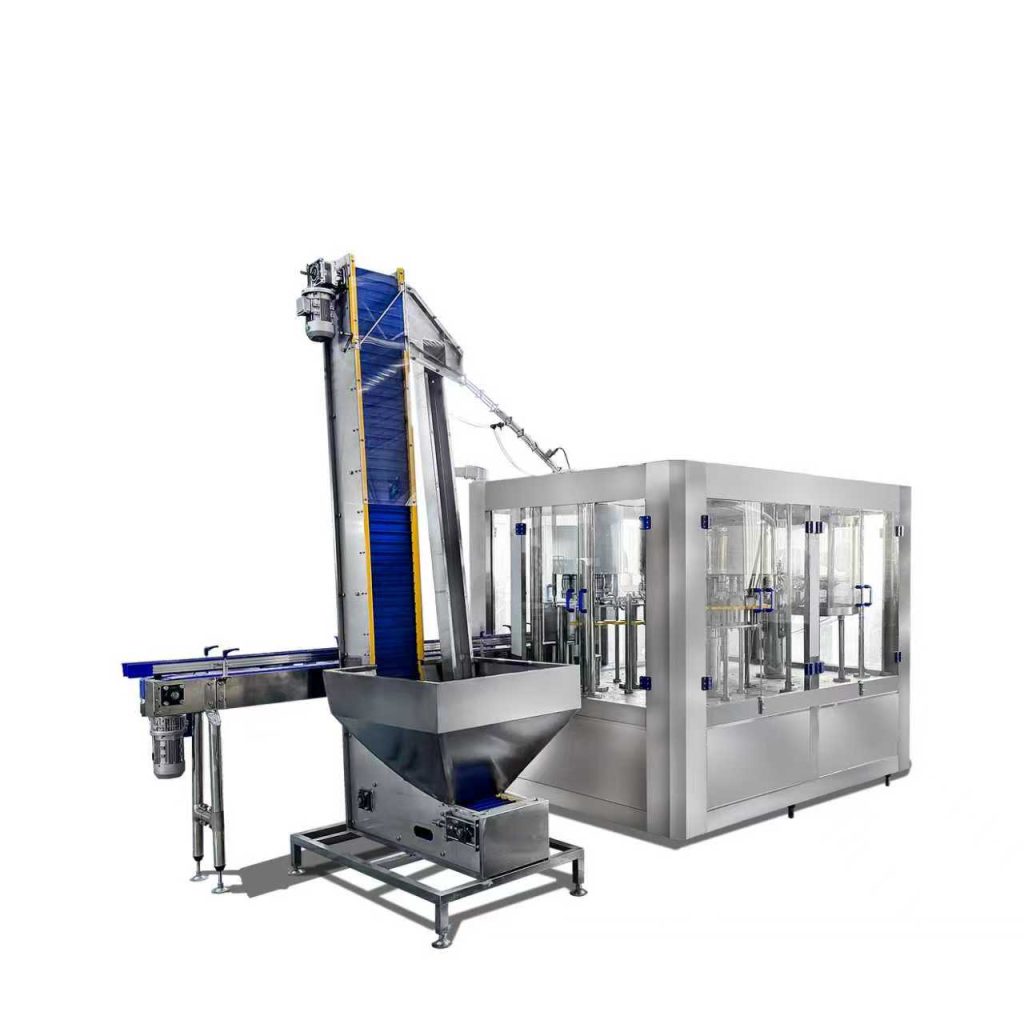
2️⃣ The 8-8-3 Filling Machine — What You Don’t See Matters
I’ve seen $2,000–$3,000 price differences between two “identical” 8-8-3 filling machines.
The question is not the model number.
The question is what’s inside.
-
Is the machine frame CNC-machined in-house?
-
Are column bearings high precision grade?
-
Is the PLC from Siemens or Mitsubishi Electric?
Cheap bearings create vibration.
Vibration reduces filling accuracy.
Reduced accuracy increases water loss and inconsistent bottle levels.
Inconsistent bottles damage brand perception.
Small deviations × millions of bottles = real financial loss.
That invisible instability slowly increases your bottled water project cost — without you noticing.
3️⃣ Engineering Economics: Why Price Is the Wrong Metric
In engineering, we don’t evaluate by purchase price.
We evaluate Total Cost of Ownership (TCO).
TCO = Initial Investment + Operating Cost + Downtime Cost − Resale Value
A cheaper line lowers CapEx.
But it often increases:
-
Maintenance frequency
-
Spare part replacement
-
Power consumption
-
Production interruption
Downtime is expensive:
Lost production hours × lost bottles × lost margin
-
labor
-
electricity
-
restart waste
We also measure Overall Equipment Effectiveness (OEE):
OEE = Availability × Performance × Quality
Cheap components reduce all three.
When OEE drops, cost per bottle rises.
Margins disappear quietly.
And that is how a “cheap” decision becomes an expensive lesson.
A Personal Reflection
After 20 years in the bottled water industry, especially working with first-time investors, I’ve learned one consistent truth:
The cheapest quote rarely tells the full story.
Some suppliers are genuinely cost-efficient.
Some reduce invisible components to win orders.
But equipment is not a short-term purchase.
It is the foundation of your cash flow.
Once your project reaches break-even, a stable production line becomes a profit engine.
Every additional year of smooth operation increases your ROI dramatically.
A cheap machine may save money today.
But it might demand that money back — with interest.
As we say in Chinese:
细节决定成败 — Details determine success or failure.
If you are investing in your first bottled water plant:
Don’t only compare price.
Compare structure.
Compare internal materials.
Compare component brands.
Compare long-term operating logic.
Invest in equipment that works for you —
Not equipment that makes you work for it.