+86 18823088993
tings87@jmtings.com
No.1 Jianghe Road, Duruan Town, Pengjiang District, Jiangmen City, Guangdong Province, China
+86 18823088993
tings87@jmtings.com
No.1 Jianghe Road, Duruan Town, Pengjiang District, Jiangmen City, Guangdong Province, China
Bottled Water Factory Layout: 6 Things to Check Before Buying
Planning a bottled water factory is not just about choosing a filling machine and finding space for installation.
Before buying a bottled water production line, you should evaluate your water source, electricity supply, factory location, logistics, storage space and production flow. Buying equipment before planning the factory can lead to insufficient space, unsuitable water treatment, power problems, inefficient material movement and higher transportation costs.
A well-designed bottled water factory layout connects the entire project, from raw water and packaging materials to production, storage and delivery.
Here are nine important factors to check before purchasing your bottling equipment.
The first question for any bottled water project is:
Where will your production water come from?
Common sources include:
Each source has different treatment requirements.
Borehole water is widely used where municipal water is limited. However, its quality depends on local geology and may include high levels of:
High hardness can cause scaling and reduce RO system efficiency. A water softener may therefore be required, but it should only be selected after testing the raw water.
Municipal water may already have filtration and disinfection treatment, but it should not automatically be sent directly to the filling machine. Test the supply quality and consistency before designing the final treatment system.
Surface water usually has greater seasonal variation and may contain turbidity, organic matter, suspended solids and microorganisms. It normally requires more comprehensive pretreatment.
The correct planning sequence is:
Water source → Water analysis → Water treatment system → Factory layout
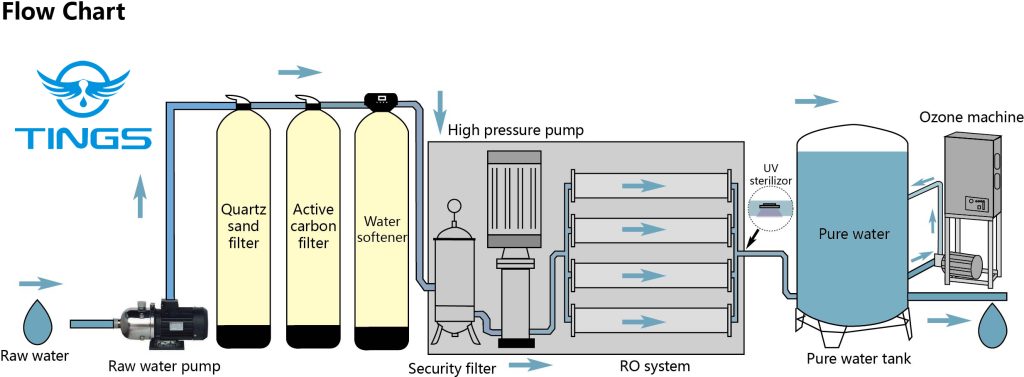
Knowing that your source is “borehole water” or “municipal water” is not enough. Two water sources in different locations can have completely different characteristics.
A professional raw water analysis may include:
The results help determine whether you need:
Do not ask a supplier to design the treatment system based only on the type of water source. The analysis is what turns a general idea into a suitable engineering solution.
Bottling equipment requires reliable industrial power. Most projects need three-phase electricity.
Before ordering equipment, confirm:
The complete electrical load may include:
Do not only ask whether the factory has electricity. Confirm whether the available supply can support the complete production line under normal operating conditions.
If the local grid is unstable, plan for a generator or another suitable backup solution.
The cheapest land or the closest water source is not always the best choice.
For a bottled water project, evaluate these three factors together:
Water source + Target market + Logistics
A location with excellent water may still be expensive to operate if finished products must travel long distances to reach customers. A location near the main market may reduce distribution costs but have higher land or water expenses.
Possotomé is located on the shore of Lake Ahémé in Benin and is associated with a natural thermal water source. Water from the area has been commercially bottled under the Possotomé brand.
This example shows how a water source can support:
However, being close to a lake does not mean the lake water should be bottled directly. The actual source, treatment process and legal requirements must be confirmed through water testing and local regulations.
Bottled water is relatively heavy compared with its selling value, so transportation can significantly affect profitability.
Consider the complete route:
Water Source → Factory → Warehouse → Distributor → Retail Market
A factory located too far from the target market may face:
Compare both sides of the calculation:
How much does it cost to bring water into production?
How much does it cost to deliver finished products to customers?
The best location depends on your target market, distribution model and overall operating costs
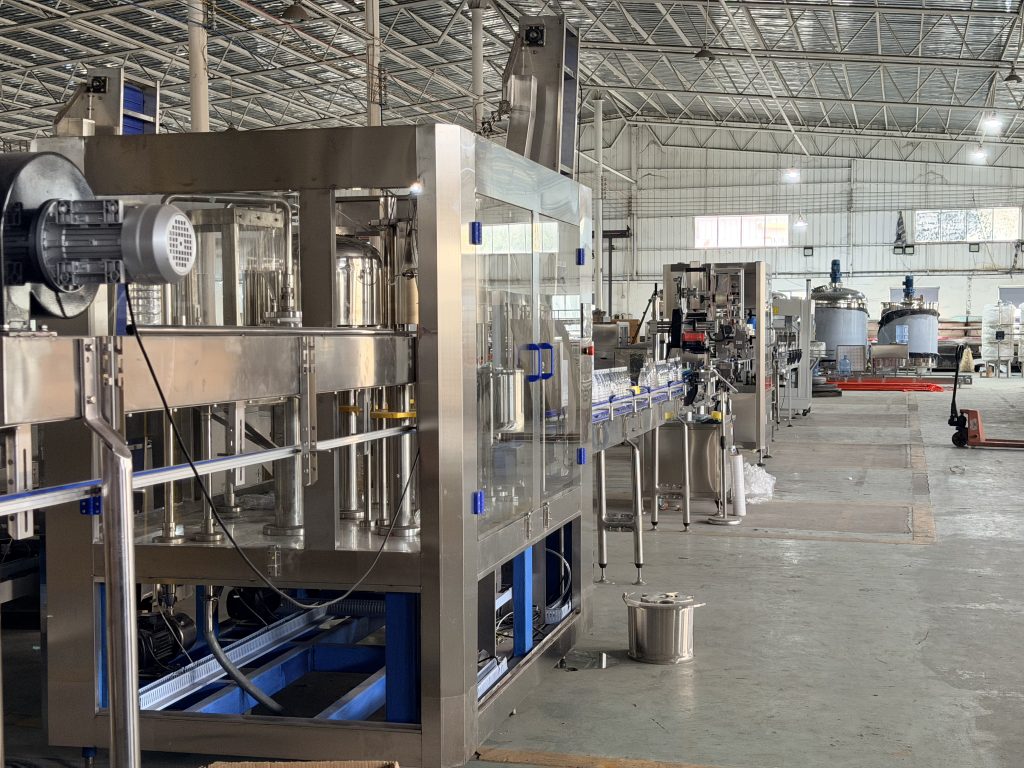
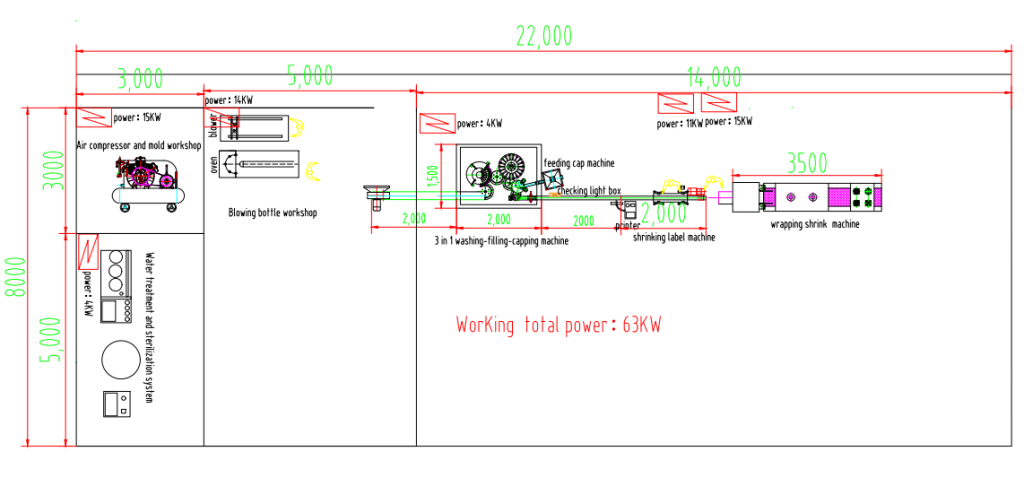
A typical PET bottled water production flow is:
Raw Water → Water Treatment → PET Preform Storage → Bottle Blowing → Air Conveyor → Rinsing, Filling and Capping → Labeling → Packaging → Finished Product Storage → Loading
The layout should follow this sequence as closely as possible.
The main principle is:
Materials should move forward, not backward.
A good layout reduces:
The factory layout should therefore be planned together with the production line configuration.
A successful bottled water project is not simply a collection of machines.
The water source affects the treatment system. The treatment system affects production capacity and utilities. Production capacity affects equipment selection. Equipment selection affects the factory layout. The factory location affects logistics and delivery costs.
Planning these factors together can help you avoid costly changes after equipment has been ordered.
If you already have a factory location, water source or preliminary project plan, evaluate the project before purchasing equipment.
TINGS can help assess your production capacity, water treatment requirements, equipment configuration and bottled water factory layout according to your project conditions.
The right production line starts with the right factory plan.
Contact TINGS to discuss your bottled water project and factory layout.
You will get a reply from our engineers within 24 hours with tailored advice.Don’t worry—your information stays private.