


A bottle neck is just 29mm wide. Yet, when setting up a new factory, this tiny detail almost completely decides whether your business will be highly profitable or go bankrupt.
Most new investors entering the bottled water production line industry spend weeks or months comparing machine speeds, browsing bottle designs, and arguing over production layouts. However, very few ask about neck finish specifications on day one.
That is usually the very first sign I am dealing with someone who hasn’t been through a full manufacturing cycle yet. Choosing the wrong specifications for your bottled water production line can lead to ongoing financial leaks that eat away at your margins month after month.
Why the Shift to 29/25 Neck Finish Happened
Several years ago, the 30/25 neck standard was still common across Africa. During that time, PET resin prices were lower, competition was less aggressive, and heavier bottles felt easier to produce and more acceptable to local consumers.
Then the beverage market in West Africa — Ghana in particular — became one of the most competitive areas on the continent. Dozens of local brands appeared in Accra and Kumasi almost simultaneously. As a result, profit margins dropped, transportation costs rose, and PET resin prices became highly unpredictable.
When that happens, successful manufacturers start looking at every single gram of plastic seriously.
That is exactly when the 29/25 standard became the dominant choice in Ghana and across much of West Africa. This shift didn’t happen because of government regulations, but because of pure business survival. If you are configuring a new bottled water production line, understanding this historical shift is vital to your cost control.
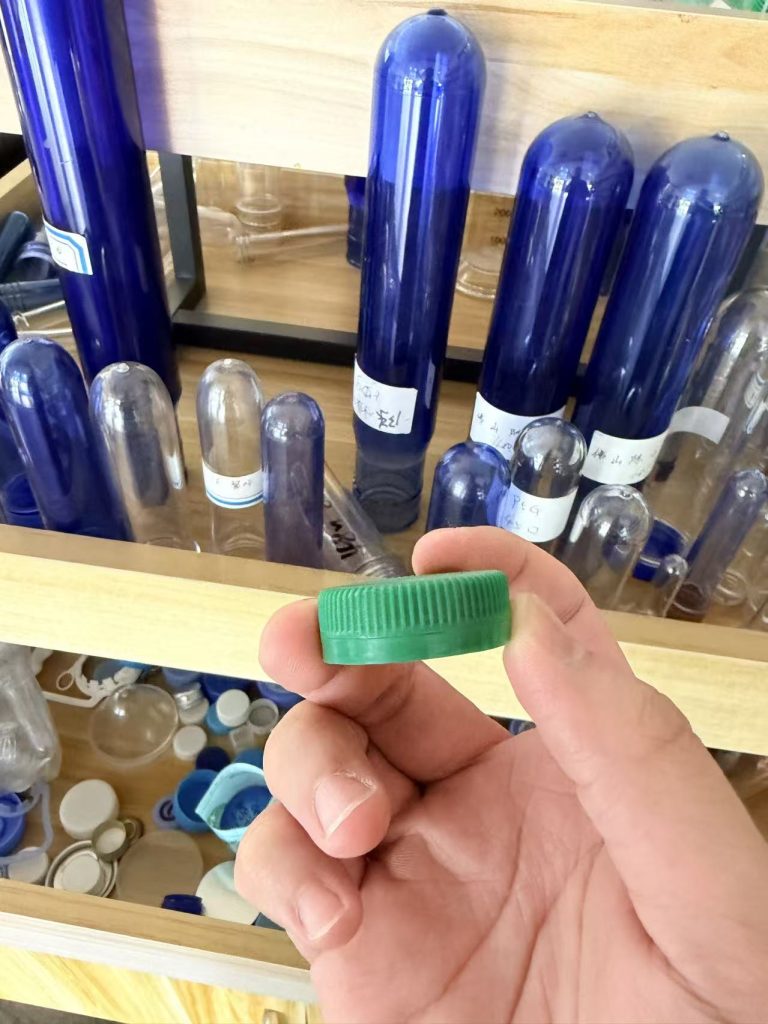
What Most First-Time Bottled Water Investors Get Wrong
The biggest misunderstanding I see from first-time investors investing in a bottled water production line is assuming that changing from a 30/25 to a 29/25 standard is simply a matter of switching the bottle caps.
It absolutely isn’t.
If you change the neck standard, you must also adjust:
-
Preform design and weight
-
Blow mold dimensions
-
Bottle shoulder structure
-
Blowing pressure parameters
-
Conveyor air-stability
-
Filling and capping machine performance
A poorly designed lightweight bottle can easily collapse under filling pressure, deform on high-speed conveyors, or fail at retail because it cannot handle rough handling during local distribution.
This is why professional bottle development takes time. Every gram of material reduction must be perfectly balanced against structural integrity, blowing consistency, and what actually survives the journey from your factory to a market stall in a remote town.
The Part Most Equipment Suppliers Don’t Tell You
Choosing a neck standard significantly affects your long-term supply chain. Many machinery suppliers just want to sell you the equipment without looking at your local ecosystem.
In markets where local cap suppliers and preform manufacturers have already standardized around 29/25, choosing a different finish creates a quiet sourcing crisis. This problem usually doesn’t show up until six months after installation — when you suddenly realize you cannot buy compatible caps locally and have to import them every single time.
Real production planning means thinking about what raw materials are available in your local market, not just what looks right on a machine spec sheet.
When is 30/25 Still a Deliberate Choice?
Despite the trend, the 30/25 standard has not completely disappeared — and in some cases, keeping it is a smart, strategic choice.
1. Premium Brand Perception
In certain African markets, some brands actually prefer 30/25 precisely because the bottle feels heavier and more solid in the customer’s hand. For manufacturers positioning their product as a premium or high-end mineral water brand, a slightly thicker, more substantial bottle reinforces that premium perception at the retail level. In markets where consumers deeply associate weight with quality, this matters.
2. Structural Requirements
For larger bottle sizes (like 1.5L or 2L), lower-speed lines, or distribution routes where extremely rough road handling is common, 30/25 offers a structural safety margin that some operators prefer.
How Local Supply Chains Decide Your ROI
Let’s look at the practical issue that most investors overlook: the local supply chain ecosystem.
In West Africa — and Ghana specifically — the local supply chain has gradually consolidated around 29/25. Preform suppliers stock it constantly. Cap manufacturers produce for it daily. When you need to reorder caps or preforms locally on short notice to keep your bottled water production line running, 29/25 gives you valuable options:
-
Multiple Suppliers: You are never held hostage by a single vendor.
-
Competitive Pricing: Bulk local production keeps the costs low.
-
Faster Turnaround: No need to wait weeks for custom production runs.
If you choose 30/25 in a market that has already standardized around 29/25, you will find yourself importing caps and preforms every time you reorder. Local suppliers simply won’t carry it at scale, or they will charge you a heavy premium because your volumes are too low.
This is how a seemingly small technical decision quietly becomes a massive, ongoing operating cost. Not on day one, but month after month, order after order.
The global packaging industry didn’t move toward lightweighting because of directives. It moved because successful manufacturers made real-world decisions about what was available, affordable, and reliable. Over time, that collective behavior became the industry standard.
Conclusion: There is No Universal “Correct” Answer
The right neck standard depends heavily on your specific target market, your unique bottle design, your local supply chain maturity, your blowing technology, and your long-term cost structure.
This is why experienced manufacturers and engineering teams discuss bottle neck specifications at the very beginning of a project — before molds are cut, and before any machines are ordered. Because once that physical decision is made, reversing it on a running bottled water production line is incredibly expensive.
A bottle neck is just a few millimeters of plastic. But inside a real, profitable factory, those few millimeters connect directly to your preform cost, your cap sourcing, your blowing stability, your filling performance, and your long-term operating margin.
That is why it must be the very first conversation — not the last.
Let’s Build Your Line Safely
If you are currently planning a factory and want to work through these technical and financial decisions properly before committing to expensive equipment, we are here to help. Explore our detailed guide on How to Choose the Right Water Filling Machine Options to learn more about layout planning, or read about global packaging sustainability trends via the International Society of Beverage Technologists (ISBT) to see where the industry is heading.