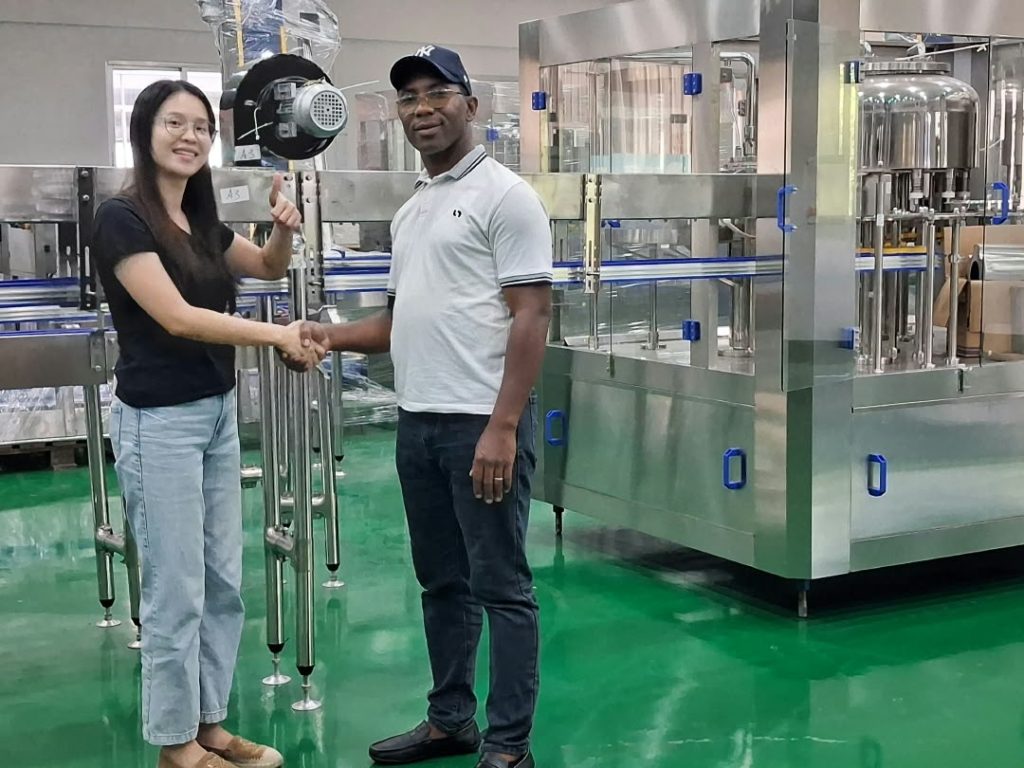
Over the past few weeks, TINGS has welcomed several customers from Guinea to our factory in China.
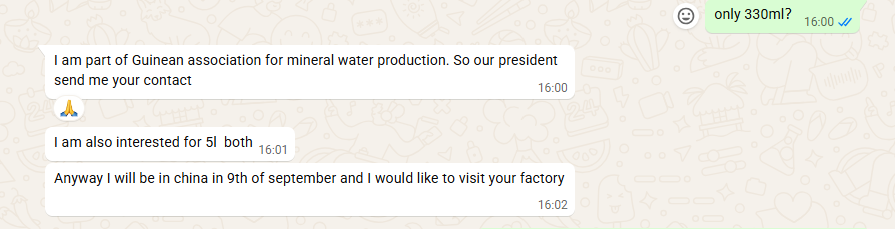
What is particularly interesting is that some of these customers were introduced to us through the president of a Guinean mineral-water industry association.
One recent customer told us directly that the association president had shared our contact with him before he planned his visit to China.
For us, this is more than another factory visit. It is also an opportunity to better understand a major transition taking place in Guinea’s bottled water industry.
The market is changing — and the change is not simply about replacing sachet water with bottled water.
A recent Guinean customer contacted TINGS after being introduced through the local mineral-water industry network.
Guinea's Water Market Is Entering a New Stage
Guinea has been progressively strengthening its regulation of single-use plastics.
The key framework is Decree D/2024/0172/PRG/CNRD/SGG of September 21, 2024, which restricts the manufacture, importation, possession and use of certain single-use plastic products.
The implementation has become stronger during 2025 and 2026.
In 2025, government authorities carried out inspections of industrial facilities, including water-production units that did not meet required standards.
In 2026, the government moved toward stricter enforcement of the plastic restrictions.
The latest joint order of September 10, 2026 specifically includes plastic sachets used for the packaging and sale of water, beverages and juices among the prohibited products.
At the same time, PET bottles are excluded from this prohibition.
This distinction is important.
The change should therefore not simply be described as “Guinea banning plastic bottles.”
Rather, the current regulation is creating significant pressure on sachet-water production, while PET bottled water remains an available packaging format.
What Does This Mean for Water Producers?
For sachet-water producers, the regulatory change may require a new business model.
For existing bottled-water producers, the transition could create additional demand and increase the importance of production capacity, packaging supply and distribution.
For new investors, this may be an opportunity to enter a market that is moving toward more formal bottled-water production.
But buying a filling machine is only one part of the project.
Investors should also evaluate:
Water source and treatment
Production capacity
PET preforms and caps
Bottle sizes
Labeling and packaging
Electricity and operating costs
Distribution
Future production expansion
The right production line should be based on the complete business model, not simply the lowest equipment price.
What Are We Seeing From the Guinean Market?
The market changes are already reflected in the customers we are receiving.
In recent weeks, several Guinean investors have visited the TINGS factory to inspect equipment and discuss their projects.
Some were introduced to us through the local mineral-water industry network.
After reviewing the equipment and project configuration, some customers have decided to move forward with TINGS.
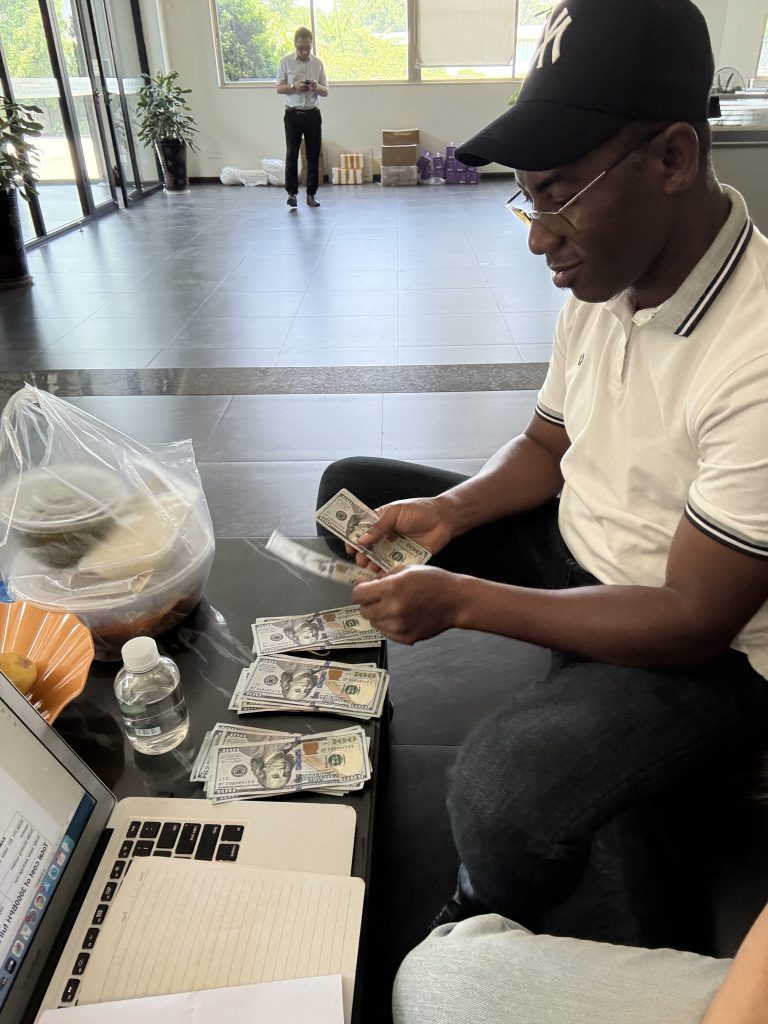
A Guinean customer payment deposit after confirming his bottled-water project with TINGS.
We appreciate the trust of these customers and the confidence placed in TINGS through the Guinean industry network.
Our View on Guinea's Bottled Water Industry
We believe Guinea’s water market is entering an important transition.
For producers, the priority is to understand the new regulatory environment and adapt their business model.
For investors, the opportunity is not simply to replace sachet water with bottles. It is to build a compliant, efficient and scalable bottled-water production system.
At TINGS, we provide complete solutions covering water treatment, bottle blowing, filling, labeling and packaging, with production capacity planned according to each project’s market and future development.
For investors considering a bottled-water project in Guinea, understanding the market change should come before choosing the equipment.